Qué pasó? 😦
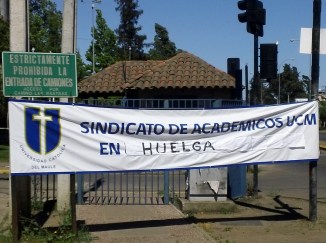
One of my friends emailed me yesterday afternoon and told me that we were not going to have class today. I had gone to our classroom last week as well and no one was there so I truly did appreciated her giving me the head’s up this week. But, our having no classes today were for very different reasons. Seems our teaching faculty are on strike as of earlier this week. I did see a small group of folks stationed in the area of the above picture on Tuesday afternoon. I also actually saw the words sindicato (union) and huelga (strike) but had assumed perhaps it was a preview or potential threat of a pending strike. I mean, no one was shouting or daring folks to cross a picket line (flashback to my blue collar Ohio upbringing) so it simply didn’t register with me. I do remember as I walked to campus a group of folks with tables, signs, and playing Carol King’s “You’ve got a friend” music (in English) as I approached the campus gate but I didn’t feel the energy of a strike in progress.
So today, I’d planned to capture this real time civic engagement activity armed with my Bloggie camera in tow I headed back to the protest site. But, to my surprise no one was there. I roamed the campus thinking I had missed the protest demonstrations and after feeling a sense of defeat returned to my office to make inquiry. I was told that there hadn’t been a protest strike on campus in years and no one was actually doing any demonstrating per se today. Scratching my head in confusion, because typically in Chile you can find folks protesting about one thing or another somewhere in the area (well at least you can in Santiago), I simply returned to my desk. I started asking my office mates questions about the strike and they seemed to know little more than I about what was actually going on. The only clear objective I understood was that they (faculty) wanted more money. Hopefully, over the next few days I’ll know more but for now, all I could find by information today was the lone signs above and below. There were no protesters or marching drummers, or faculty singing “We Shall Overcome”, at least not today there weren’t. Perhaps I’ll have more to report next week as it’s Friday and everybody’s seemed to have simply gone home for the weekend. I be sure to keep you all posted about what I learn moving forward. Enjoy your weekend. Special Note: The Chilean Presidential Elections are Sunday so next week should be a pretty exciting time here. Chau! 🙂
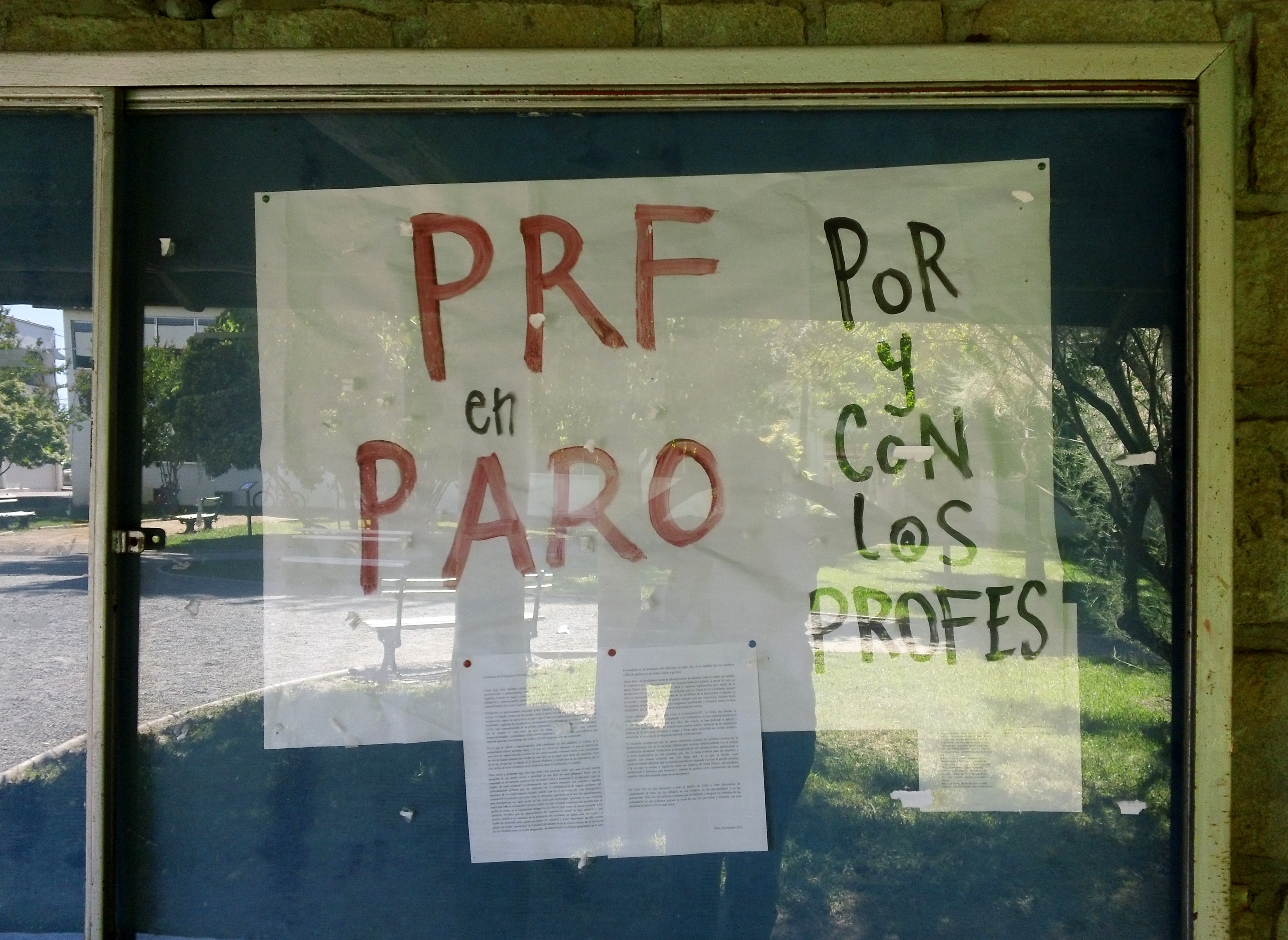 The only other sign I saw that was remotely connected to the Strike
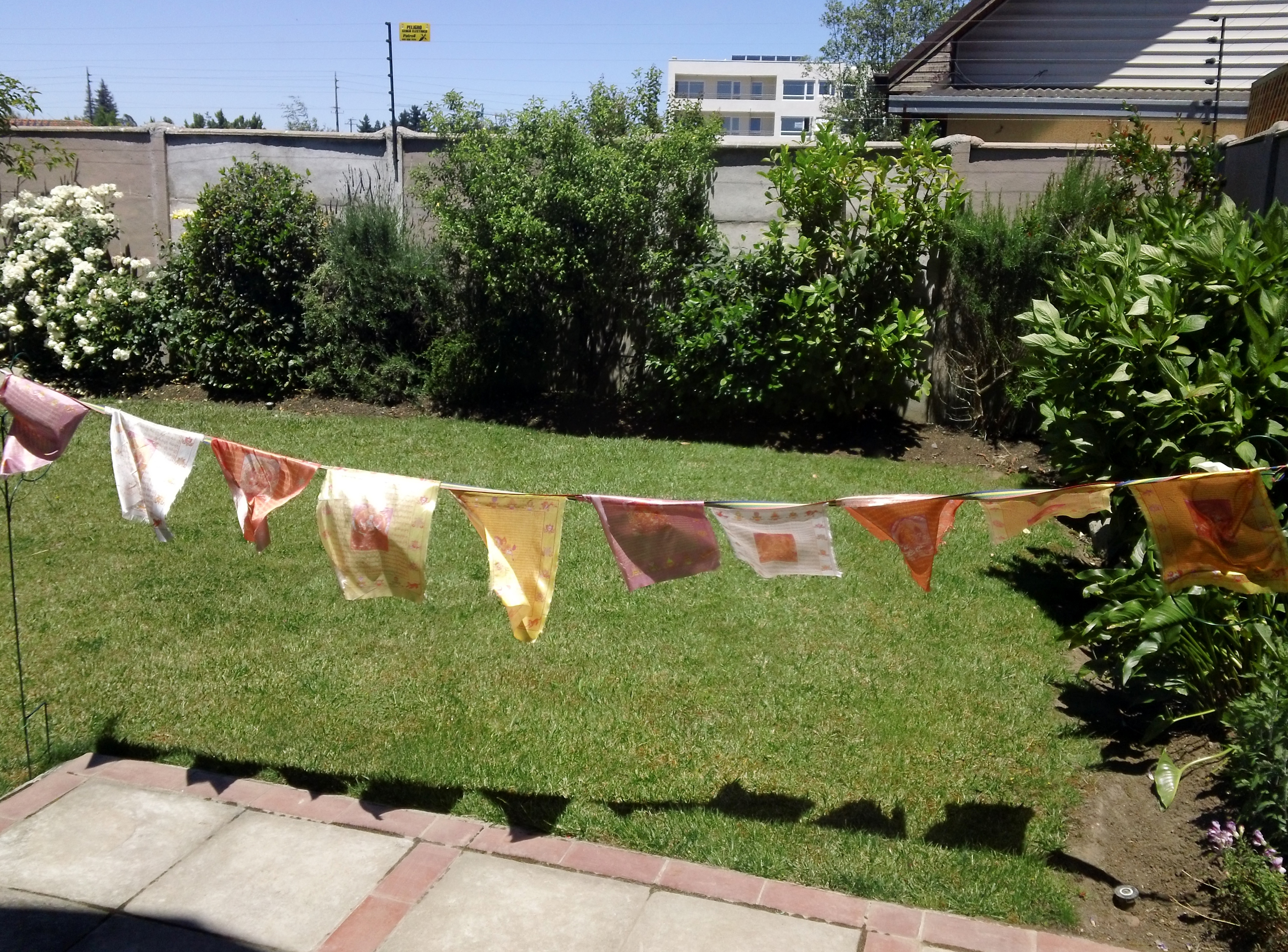 Theses are some colorful prayer clothes that Carmen had blowing in the wind outside today and I thought they were beautiful.
 I saw this full moon in the sky on my way home today and wondered if my camera would take a good photo of it… nailed it! 🙂


 The Chilean Chronicles Blog (The US Return Extended Version)