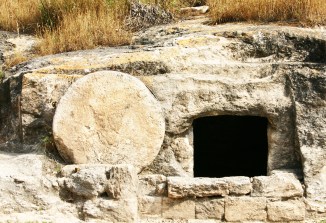
Luke 24:5 King James Version (KJV) And as they were afraid, and bowed down their faces to the earth, they said unto them, Why seek ye the living among the dead?
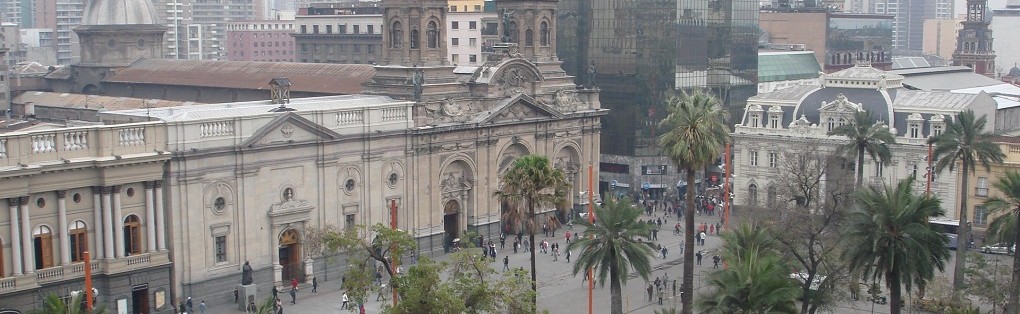
My First Easter Sunday in Chile
In light of Resurrection Sunday on yesterday, and today feeling particularly reflective about life, my academic/career plans, and my relationship to Jesus of Nazareth. I thought about his messages offered to the world. Holidays have always been special times spent with my family, but since entering my Ph.D. program at the University of Georgia and now conducting my dissertation research in Chile, South American, I have learned to adjust to not being able to eat the wonderful family meals prepared by my mother or one of my sisters during holidays. I also miss out on the family fellowship times which can easily turn quite competitive if someone breaks out the games and we all form our teams looking to become the Scrabble, Monopoly, or Trivial Pursuit champions.
However, these memories did not lead to an existential crisis, on the contrary they led to more of an existential epiphany. Why does a person need to feel ostracized if they hold values and beliefs that are not common to me or visa versa? More specifically, when I study the life of Jesus, it is rarely depicted like you see in commercially produced movies or picture cards commonly seen during religious holidays. Jesus was very strong in his objections to religious leadership that held the less powerful to standards that they themselves did not regularly achieve. Yet at the same time Jesus produced a message that was both compassionate and full of expectation that called people to strive to a more excellent way. The call did not seem to be based upon some rules or commandments, but more due to his wanting people to aspire to their highest forms of self. Jesus’s teachings suggest to me that these lofty goals of self-awareness are not easily attainable in disassociation to The Creator.
We live in a physically comprehensible world, but our awareness of “reality” is incomplete if we limit ourselves to those things we can understand with our physical senses. Things that are explained through the principles of physical/natural science phenomenon are not enough for me cognitively or intellectually. For example, what is the substance that makes living creatures by nature want to survive… and conversely, what element of the self is lost among those people and things that no longer want to survive and exist to the point that death becomes a welcomed relief. I have come to the conclusion that it is our spirit, in the case of human beings, made alive unto God the Creator in a way that is not fully or easily comprehensible. The proposed inexplicably, in my view, is in large part because we are “so fearfully and wonderfully made” (Psalm 139:14) therefore, the five known human senses become insufficient as a means to describe spiritual connections. Also, the fact that God is a Spirit and the aspect of everyone that is like God is made of spirit being, there has not to date been any scientific physical instrumentality that can capture the individual “you” in its entirety. Ahhhhhhh, there it is, complexity has just entered the room (smile and a wink). Jesus is my role model for teaching. I admire how when dealing with adult learners he used a variety of modalities to “meet people” at the level in which they could comprehend his messages. He used parables and allegories to help the most simple to the most erudite listeners understand his teaching.
Children and the less powerful preceded Jesus on a fateful Passover day (that many celebrate as Easter) with songs of praise and hopefulness; while respected scholars and theologians were so captivated by his wisdom and understanding of scripture many secretly counted themselves among his disciples but kept it hidden for fear of being ostracized by those who were the more politically connected and religiously powerful during that time period.
Fast forward to 2014, I find myself at an academic/career crossroad. I have been doing some research for my committee chair (I am also her graduate research assistant) about what will the 21st Century New Knowledge academic and/or scholarly practitioner resemble in comparison to pre-millennium professors and practitioners. I first surprisingly discovered that I fall into the category of Generation X, with a confidence interval of ± 2. he he I have also learned that there doesn’t appear to be the mass exodus of aging faculty leaving the academy as miscalculated; poor economic times has led to many a professor to work longer versus entering into retirement. So currently, we are producing from our universities a dearth of bright-eyed new doctoral graduates with no place to go per se.
I personally am finding the “publish or perish” paradigm quite unsettling. Not because I have reservations about publishing or writing, it is because I want to publish and write things that I feel are important to improving and changing lives, systems, and societies. I don’t want to be so obsessed with impact factors and finding “the right” journals that my research and scholarly contributions will only be relevant to a small circle of scholars looking to compete with their colleagues in introducing the next big theory or framework. I don’t want to lose folks who I thought were friends because they might be jealous of my seeming success during their time of struggle. Nevertheless, the conflict for me is that I love teaching and engaging with students and communities. I love academic research as I am also a scientist by nature, holding degrees in biology (specializing in microbiology) with a minor in chemistry, plus a MPA. My adviser mentioned to me an emerging field of “Social Entrepreneurs”. I need to do more investigation into this area as I think it might be something I will find rewarding. I told my committee member Dr. Watkins that I am not sure if I want to be an Academic and she vehemently told me that she very much thinks that academia was the right career path for me. That made me smile really big on the inside knowing someone I admired and respected so much in academia viewed me as a future scholar with much to offer.
This is probably one of my longest blog posts, which is cool because it’s been a minute since my last post, and this issue is weighing heavily on my heart and mind in my final year of doctoral candidacy. Now, if I could simply find a career (not necessarily in this particular order) post dissertation completion that allows me to: 1) show the love and compassion of Jesus yet have the right to hold my own values and convictions, 2) exercise my love for teaching, research, and civic engagement while getting paid to do so, 3) be able to make a contribution to the field through my publishing and research, 4) make sure I have a personal life with time for my family and friends, 5) have my own business where I can focus on social issues and ministry needs that are directed toward those with less power and opportunity in life and finally, have the time to go to my Zumba and Body Pump classes every week; then I would be most figuratively in Heaven on Earth! 🙂

 The Chilean Chronicles Blog (The US Return Extended Version)