
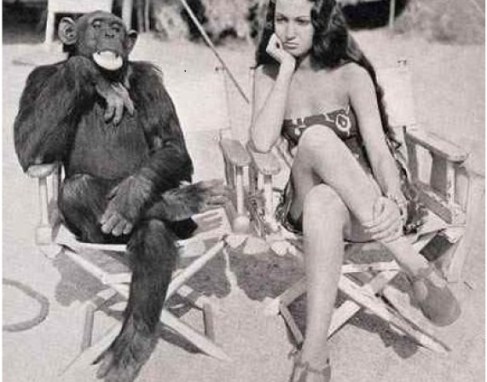
In biology, the gene pool has a mechanism for change that functions through a process of replication, variation, and natural selection. This same type of mechanism is mirrored in the “meme pool”, as Dawkins (1989) describes memes as behavior units of culture that are imitated from person to person. The science of memetics,1 is a powerful theory owning both supporters and critics due in large part to the diversity of definitions and conceptualizations associated with what we have come to know as “memes”.
Most commonly known are the image memes often found circulating via the internet and social networking sites. However, the key feature of a meme is that it can be a vertical (though more commonly horizontal) transfer that takes place primarily through non-genetic means. Also, in contrast to the gene, the meme does not require a “host” agent to perpetuate itself as cultural artifacts can also function as memes. What matters most is the ability to imitate in such a manner that through a process of natural selection the meme either prospers and is passed on or becomes extinct as it loses its utility as a meaning-maker.
Clare Graves (2005) found in his research on adult biopsychosocial development, a pattern whereby human nature has the capacity for increasingly complex neurological coping systems congruent with changing life conditions that require new ways of thinking and being in the world. Graves’ protégés in their 1996 book Spiral Dynamics (Beck & Cowan, 1996) used the concept of a Meta-meme that served as a framing unit for a collection of unique (and hierarchical) modes of thinking, value systems, and ontologies that advance developmentally from the simple to the more complex throughout ones adulthood. However, Graves (2005) also held that change was not inevitable and individuals could most certainly live out the entirety of their physical lives centralized in a particular level of existence. His “emergent cyclical level of existence theory” (ECLET) argued that the human quest for understanding and being in the world was never-ending. Therefore, our ability to formulate new memes in resolving existential problems remains an open-ended process. With this in mind, I propose that human beings have the potential for unlimited and adaptive meme formulations that are subject to the influence of both biological neurology as well as cultural environment(s).
Such a position gives great hope to those advocates of lifelong learning who offer that adults do not simply “peak” in their intellectual development and with advancing age subsequently plummet into a life of decreasing value and vigor. Howard Gardner (2011) argues that as some bodily-kinetic competencies may in fact decline with age, there is certainly a potential for increasing intellectual competencies (e.g., spatial and personal) among aging adults. I would submit that much is to be gained through an integral approach to the study of adult learning; and applying theories such as Spiral Dynamics and Multiple Intelligences in understanding adult cognition. Moreover, an interdisciplinary approach that incorporates neuroscience, biology, as well as spirituality, are especially positioned to inform what Graves (2005) viewed as the “never ending quest of human emergence” (p. 417).
Note:
1The theory and study that holds mental contents of cultural operate analogous to Darwinian evolution.
Beck, D. E., & Cowan, C. C. (1996). Spiral dynamics: Mastering values, leadership, and change. Cambridge, MA: Blackwell.
Dawkins, R. (1989). The selfish gene (2nd. ed.). London: Oxford University Press.
Gardner, H. (2012). Frames of mind: The theory of multiple intelligences. New York, NY: Basic Books.
Graves, C.W. (2005). The never ending quest. Santa Barbara, CA: ECLET Publishing.
 The Chilean Chronicles Blog (The US Return Extended Version)